Name the kind of interruption you actually face
A ten-minute break is not always ten uninterrupted minutes. You may be waiting for a call, watching for a delivery, or sharing attention with another task. Begin by describing what can interrupt you and how quickly you must respond. Then distinguish losing a little personal progress from inconveniencing other players. Those are different costs, even when both games appear to offer short sessions.
Choose a game for the moment you have, not the moment its promotional footage suggests. A live match can be brief yet require complete attention throughout. A longer solo game may permit comfortable pauses, but that must be checked in the current version. The useful question is not only how long a session lasts; it is what happens when you need to leave before the natural endpoint.
Compare live commitment with solitary attention
Among Us is described as a group game involving tasks, hidden roles, sabotage, and discussion. Your departure can affect the social puzzle and the other participants. It therefore suits a planned gathering or a period when you can remain engaged more naturally than an unpredictable waiting-room interval. The quality of the group’s communication also matters: casual play and competitive deduction require different shared expectations.
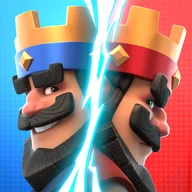
Clash Royale similarly centers on real-time player-versus-player battles and requires a connection. Its tactical decisions may be compact, but they still belong to a live contest. Before starting either game, ask whether you can stay through the round and whether the connection is dependable. A solo alternative is often a better fit when answering a real-world interruption immediately is more important than finishing the digital activity.
Distinguish a bounded puzzle from an accumulating world
Monument Valley’s listing describes manipulating impossible architecture through a sequence of designed puzzles. Its attraction is noticing a visual relationship and discovering a path. Stardew Valley describes a broader farming role-playing routine with crops, relationships, exploration, and other continuing projects. Both are solo-oriented experiences in the context of these listings, but they ask you to carry different kinds of mental context between sessions.
A spatial puzzle may leave you remembering one unresolved structure. A farm may leave you remembering several plans and priorities. Neither is inherently better for limited time. Consider whether you enjoy returning to an ongoing personal world or prefer a more bounded visual problem. A brief note about the next farm goal can reduce the cost of returning after a week, while a fresh look at a puzzle may itself be part of the pleasure.
Test the stopping point instead of assuming it
Use an unimportant early action to inspect pause, save, and resume behavior. Follow the game’s current instructions, leave at an appropriate moment, and confirm where you return. Stardew Valley’s listing mentions mobile autosave features, and Monument Valley describes cloud save, but those statements do not explain every interruption scenario. A local pause, app closure, account change, and device replacement are distinct events.
Subway Surfers presents a continuous chase built around reflex decisions. A run may feel like a natural small unit, yet the desire for one more attempt can repeatedly extend the session. Test both the mechanical stopping point and your own willingness to use it. A game that permits stopping is not necessarily a game you find easy to stop; that personal difference belongs in the comparison.
Read the purchase structure before a frustrating moment
The captured Stardew Valley listing states no in-app purchases, while Monument Valley identifies Forgotten Shores as a separately purchased chapter set. Those are different arrangements even before comparing the experiences themselves. Check the current store page, included content, and applicable purchase terms rather than relying on an old price or another platform’s edition. A recognizable title does not establish identical content or billing everywhere.
Clash Royale’s listing explicitly states that optional purchases include random items. That deserves a rule made before a loss, an event, or an appealing offer creates urgency. Read the actual offer and any published probabilities; do not assume spending guarantees a desired outcome. The captured listings for Among Us and Subway Surfers also mark in-app purchases, but do not document every present offer. Inspect the live purchase screens instead of inventing a uniform spending model for all three games.
Create a budget that survives a near-miss
Decide what you are willing to spend for entertainment without depending on a particular result. A purchase can be enjoyable and deliberate, but it should remain acceptable even if the next match is lost or a random outcome disappoints. Avoid using money already spent as the reason to spend more. Previous investment does not make the next offer more useful or turn a collection milestone into an obligation.
On a shared device, review purchase authentication before play. For younger players, discuss the difference between earning something through play, buying a known item, and buying an uncertain outcome in language they understand. Revisit the rule when the game introduces a new kind of offer. A spending boundary works best when it is clear enough to apply in the moment, not merely an intention to be careful.
Evaluate one ordinary session, not the most exciting trailer
For Stardew Valley, try pursuing one modest farm goal and notice whether choosing priorities is enjoyable. For Monument Valley, observe a scene before manipulating it and see whether the visual reasoning appeals. For Among Us, finish a round with the intended group and assess the tone of discussion. For Subway Surfers, play a fixed number of attempts and stop at the planned boundary. For Clash Royale, review one tactical decision after a battle without immediately treating a purchase as the solution.
Record three observations afterward: what was satisfying, what made stopping difficult, and whether any purchase prompt changed your mood or plan. This is more actionable than a star score because it connects the game to your own routine. If the best part of the session was the promise that a later unlock would finally make it enjoyable, distinguish that anticipation from the experience you actually had.
Choose a continuing relationship you can leave comfortably
Before investing substantial time, inspect account recovery and current save-transfer guidance. A farm, puzzle history, or competitive collection can represent meaningful personal effort, but it should not be your only reason to continue playing. Keep access information secure and avoid assuming that reinstalling an app automatically restores every kind of progress or purchase on every device.
The best choice may change with the day. A planned evening with friends supports a different game from a quiet solo interval or a break that can end without warning. Select for the attention you can give, the kind of progress you enjoy, and the spending arrangement you understand. A successful choice leaves you satisfied with the session you completed, rather than pressured by the next reward or reluctant to return to the rest of your day.
Follow the sources
- Stardew Valley — official Google Play listing ↗
- Monument Valley — official Google Play listing ↗
- Among Us — official Google Play listing ↗
- Subway Surfers — official Google Play listing ↗
- Clash Royale — official Google Play listing ↗
Product details can change. This guide offers an editorial framework, not a claim that every described trial was performed. Corrections are welcome.